
Prediction Markets & The World Cup: The Good, The Bad, And The Legislatory
17 Jun, 2026
- ⚽World Cup prediction markets are booming, with billions in trading volume turning football fandom into live financial speculation
- ⚖️Courts and regulators are circling, as Wisconsin, Tennessee, New Mexico, and the CFTC battle over who controls sports-event contracts
- 📈Kalshi, Polymarket, and sports trading platforms are under the spotlight, as the line between betting, investing, and entertainment gets blurrier by the matchday
The 2026 FIFA World Cup was always going to be historic. It is the first edition with 48 teams, the first hosted across three countries, and the biggest tournament in World Cup history with 104 matches across 16 host cities in Canada, Mexico, and the United States. FIFA’s official schedule confirms the tournament’s expanded match calendar and host-city structure, making this edition far larger than the 64-game format fans knew for decades.
But the expansion is not only changing football. It is also changing the market around football.

This World Cup has become a major proving ground for sports prediction markets, where users trade outcomes instead of placing traditional sportsbook bets. On these platforms, a match, group finish, qualification path, or outright winner can become a live financial contract. Prices move with goals, injuries, lineups, red cards, VAR decisions, travel conditions, and public sentiment.
That gives the 2026 World Cup a second layer of competition. On the pitch, countries are chasing the trophy. Off it, platforms such as Polymarket and Kalshi are testing how big sports-event trading can become before regulators redraw the lines.
The Scale: Why The 2026 World Cup Is Built For Prediction Markets
The bigger the tournament, the bigger the trading opportunity.
The 2026 World Cup includes 48 national teams, divided into 12 groups of four. The top two teams from each group advance, alongside the eight best third-place teams, creating a new Round of 32 before the traditional knockout rounds. That format creates more scenarios, more uncertainty, and more ways for markets to move.
A single late goal may not only decide a match. It can affect goal difference, group ranking, third-place qualification, knockout seeding, and even the projected path of tournament favorites.
For prediction markets, that matters. More matches mean more tradable events. More qualification routes mean more market complexity. More uncertainty means more price movement.
The audience scale is just as important. FIFA President Gianni Infantino said the 2026 World Cup had received more than 500 million ticket requests, around 10 times more than the combined total for the previous two World Cups. That demand shows the commercial power of the tournament. Prediction markets are not attaching themselves to a niche sports event. They are attaching themselves to the most global sporting event on the calendar.
The Numbers: Polymarket And Kalshi Turn Football Into Liquidity
The trading figures show how quickly World Cup prediction markets have moved from curiosity to serious volume.
According to the original market figures, World Cup-related markets on Polymarket have climbed past $2.36 billion in cumulative trading volume, making the tournament one of the platform’s biggest events behind the 2024 U.S. election. Kalshi’s World Cup winner market has also generated major activity, with approximately $281 million in trading volume cited during the tournament’s opening stretch.
The growth since kick-off is especially notable. Polymarket added roughly $400 million in new World Cup volume, while Kalshi added around $180 million.
Those numbers are important because they suggest this is not only casual fan engagement. It is a liquid, fast-moving market reacting to the tournament in real time.
The basic appeal is easy to understand. Instead of reading traditional odds, users can often interpret prices as rough probabilities. A contract trading at 60 cents broadly suggests the market sees around a 60% chance of that outcome happening. A team priced at 25 cents looks like a 25% market-implied shot.
That makes prediction markets more intuitive for many users. They turn complex sports outcomes into readable probability prices. During a World Cup, where storylines change daily, that can be extremely powerful.
The Appeal: A Live Probability Map For The World Cup
Prediction markets work especially well with tournaments because tournaments are not static.
A team’s outlook can change after one performance. A favorite can drift after an injury. A long shot can shorten after a favorable draw. A group can become wide open after one unexpected result. Every match creates new information, and prediction markets are designed to absorb that information quickly.
The 2026 FIFA World Cup adds even more variables.
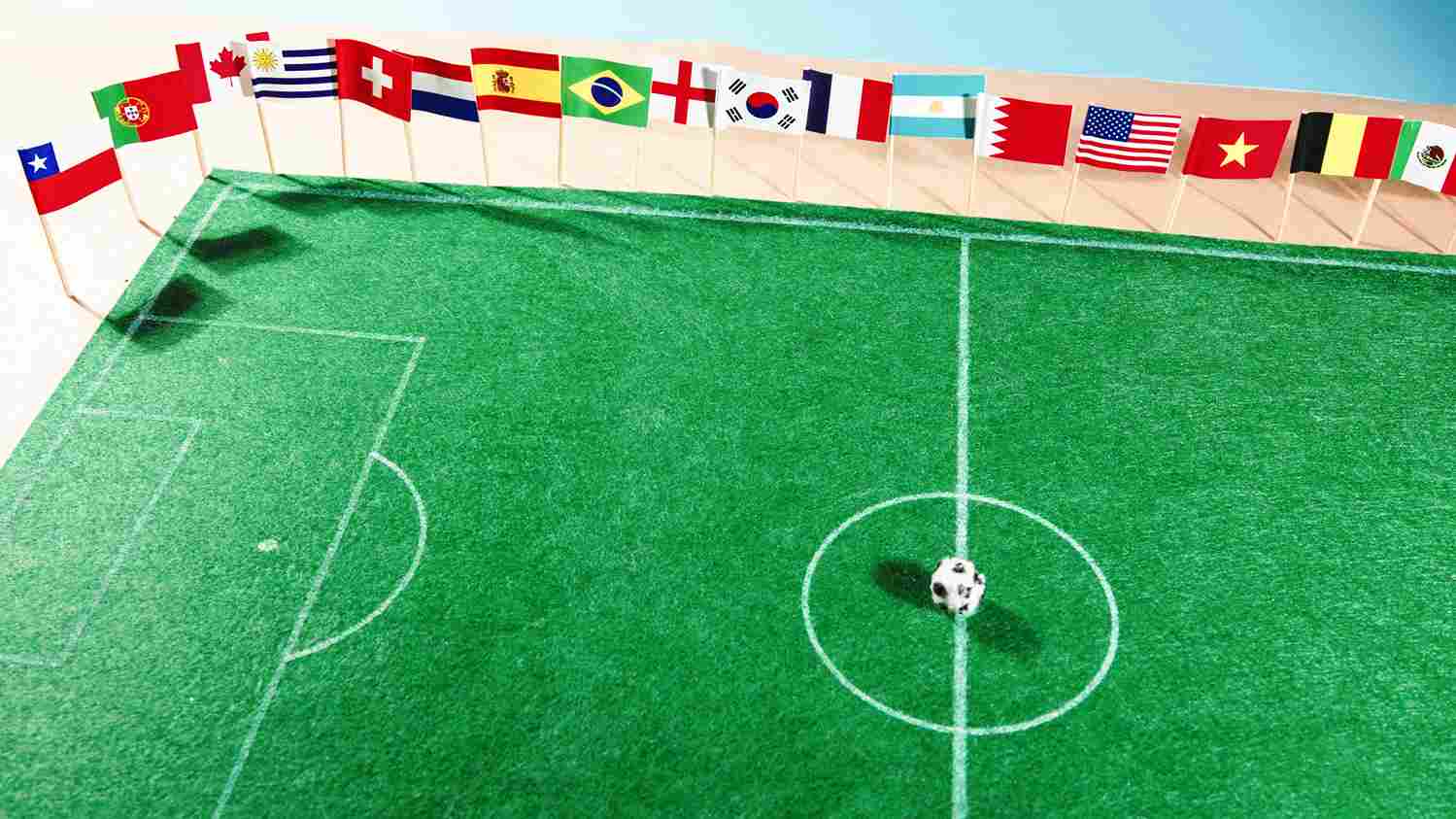
Teams are travelling across a huge geographic footprint. The tournament spans multiple climates, time zones, and stadium conditions. Reuters reported that researchers warned 26 of the 104 matches could be played in dangerous heat and humidity, while only three of the 16 stadiums have air conditioning.
For fans, that is a welfare and performance issue. For traders, it may also become part of the market conversation. Heat, travel, squad rotation, injuries, and fixture congestion can all influence how users assess a team’s chances.
That is where prediction markets differ from traditional football discussion. They do not simply ask who looks good on paper. They translate every new piece of information into a moving price.
In that sense, the World Cup becomes a live probability map. Every result updates the route. Every surprise creates a new opportunity. Every market movement tells a story about what traders believe now, not what they believed before the tournament started.
For those who are following the World Cup on Roshtein.com, head to the Events section and employ the same tactics as those profiting from sports prediction markets to climb the leaderboards and win big prizes in the 2026 World Cup game!
The Legal Question: Trading Product Or Sports Bet?
The growth of World Cup prediction markets also raises the central legal question: are these financial contracts or sports bets?
Supporters argue that prediction markets are event-contract exchanges, not sportsbooks. They say users are trading financial-style contracts in regulated markets, with prices reflecting collective expectations. From that perspective, a World Cup contract is a forecasting instrument, not a conventional gambling product.
State regulators often see it differently.
To them, the user experience can look very close to sports betting. A person risks money on whether a team wins, qualifies, or lifts the trophy. The terminology may be different, but the underlying behavior can appear familiar.
That difference matters because sportsbooks operate under state-by-state gambling rules. They need licenses, pay taxes, follow responsible gambling requirements, comply with advertising restrictions, and operate within local legal frameworks. Prediction-market operators argue that certain event contracts fall under federal commodities law, not state gambling law.
The World Cup has made this conflict harder to ignore because the trading volume is now substantial. When markets connected to one tournament reach billions of dollars on Polymarket and hundreds of millions on Kalshi, regulators are no longer looking at a small experiment. They are looking at a new sports-money ecosystem.
READ MORE:
The Regulatory Fight: CFTC, Kalshi, Wisconsin, And Tennessee
The legal pressure around sports prediction markets is already moving through courts and agencies.
In Wisconsin, defendants in the state’s lawsuit against Kalshi and other operators faced a June 15 deadline to respond to Wisconsin’s motion to remand the case back to state court. Wisconsin argues that the dispute belongs under state authority. Kalshi and the other defendants argue that federal court is the right venue because the case raises questions tied to federal commodities law and the Commodity Exchange Act.
Wisconsin has also filed a preliminary injunction request, positioning itself to push enforcement if the court denies remand. In simple terms, Wisconsin wants sports-event prediction contracts treated as illegal or unauthorized gambling. The operators want them treated as federally regulated financial contracts.
In Tennessee, Kalshi’s response brief is due June 17 in the state’s appeal of a preliminary injunction that stopped officials from enforcing a cease-and-desist order against the exchange. Tennessee wants the Sixth Circuit to overturn that injunction, while Kalshi wants to keep state regulators from shutting down its sports-event contracts.
The CFTC has also stepped more directly into the debate. On June 10, 2026, the agency announced a proposed rulemaking process concerning event contracts involving enumerated activities, a category relevant to the broader prediction-market debate. Recent reporting also says the CFTC is moving toward rules that could permit certain sports-event contracts while restricting more sensitive markets, including those tied to injuries, officiating decisions, fights during games, and high school sports.
That distinction is important. It suggests regulators may not ban sports prediction markets outright, but they may try to define which types of sports contracts are acceptable and which cross the line.
The World Cup Could Define The Future Of Sports Prediction Markets
The 2026 World Cup is more than a football tournament for prediction markets. It is a stress test. The format gives traders everything they want: 104 matches, constant news, group-stage uncertainty, knockout drama, global attention, and enormous emotional investment. The market figures show that users are responding, with Polymarket past $2.36 billion in World Cup volume and Kalshi’s winner market around $281 million during the opening stretch.
But the same growth that makes prediction markets exciting also makes them legally sensitive. For supporters, these platforms offer transparent probabilities, real-time forecasting, and a more sophisticated way to engage with the World Cup. For critics, they risk blurring the line between trading and gambling while bypassing state-level sports betting rules.
That is why the 2026 World Cup matters so much. It gives prediction markets their biggest sports stage yet, but it also gives regulators their clearest test case.
By the time the trophy is lifted on July 19, 2026, one team will be world champion. The bigger question is whether prediction markets will leave the tournament looking like the future of sports trading, or the next major battlefield in gambling regulation.